

Advice from super funds ‘polar opposite’ of vertical integration





It would be misleading to compare superannuation funds giving advice to the vertical integration activity of the big four banks, according to My Dealer Services (MDS).
Under the second tranche of Delivering Better Financial Outcomes (DBFO) legislation, superannuation funds would be able to provide ‘simple advice’ to their members. The idea is for this to be delivered by a new class of adviser (NCA) who will have less qualifications than a full financial adviser.
NCAs will be prevented from providing advice on more complex topics, such as establishing a self-managed superannuation fund (SMSF) or advising on a managed investment scheme.
Commenting on the proposal, Alex Euvrard, managing director of MDS, said this would be unlikely to experience the same issues as when advice and wealth management was provided by the big four banks, which subsequently led to the Hayne royal commission.

He said: “It is upside down to compare super funds to the big banks. Super funds already have plenty of assets, advice is just complementary to this, it isn’t a product push.
“Super funds want advice to solidify and improve their core member offering whereas the banks used it for distribution purposes, it is the polar opposite.”
However, he acknowledged super funds will only pursue it if it is a cost-effective development for the funds, regardless of what the government or ASIC suggests.
“Super funds will likely provide general, intra-fund advice and goals modelling which is very different to holistic advice provided by financial advisers. Yes, they will have to do what the regulator says but they will also only do what is in the best interest of their members.”
“If advice isn’t making money then that erodes members’ super money, they can’t run it at a loss,” added MDS head of strategy, Ashley Mahadeea.
It is understood that major super associations are in discussion with the Financial Advice Association Australia around the DBFO legislation which will legislate on the use of ‘qualified’ advisers to provide simple advice at super funds, expand access to retirement income advice and explain how advice fees can be deducted from a members’ super account.
It is not only human-led advice that is on offer as some super funds are piloting the use of digital advice. AMP has released a retirement planner and three stand-alone retirement sub-journeys to support its AMP Super Fund members with retirement advice.
This includes a super projections pathway to help members assess their potential retirement income, what government age pension they may be eligible for, how they might benefit from a lifetime income solution, and if they are on track for their retirement goals.
Aware Super has launched Retirement Manager, in partnership with Bravura Solutions, which is currently in pilot with a small group of members and is expected to be made available to all eligible members aged 60 and over later this year.
Meanwhile, UniSuper has a digital advice service with Ignition Advice to provide members with “accessible, affordable personal advice, at scale, covering superannuation, insurance, investments, and retirement options”.
AUTHOR

Laura Dew
Laura Dew is editor at Super Review. Prior to joining SR, she spent five years working at Investment Week in the UK covering asset and wealth management.
Recommended for you
The peak industry body has welcomed new legislation reforming super advertising and onboarding, stating the changes built on recent Payday Super measures.


Funds are facing criticism after a new analysis found $33 billion is invested by super funds in companies expanding coal, oil and gas globally.


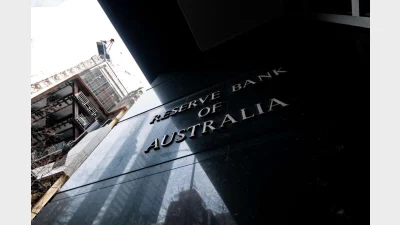
There is “no chance” of a cut by the Reserve Bank of Australia next week, according to UniSuper’s head of fixed interest David Colosimo.

State Super has begun its partnership with Frontier Advisors, transferring investment staff and taking a major equity stake to support long-term capability.




TOP PERFORMING FUNDS
ACS FIXED INT - AUSTRALIA/GLOBAL BOND
Fund name
3y(%)pa
1
DomaCom DFS Mortgage
220.82 3 y p.a(%)
2
Loftus Peak Global Disruption Fund Hedged
110.90 3 y p.a(%)
3
Quay Global Real Estate Fund (Unhedged) Active ETF Hedged
89.15 3 y p.a(%)
4
SGH Income Trust Dis AUD
80.01 3 y p.a(%)
5
Global X 21Shares Bitcoin ETF
76.11 3 y p.a(%)
