Are industry superannuation funds and industry fund bodies overly concerned with SMSFs? A Super Review roundtable tries to find out.
Mike Taylor, managing editor, Super Review: SMSFs, there’s been an awful lot of pushback from some industry funds and industry fund bodies, there’s no secret about that.
I’m just wondering whether they’re overly concerned about it in the sense that it’s a very different demographic.
So I’m just interested to get the view of the panel on SMSFs and their interaction with the more conventional part of industry? So, Gordon, you’re in a policy area?
Gordon Noble, policy director, Association of Superannuation Funds of Australia (ASFA): As for covers we have SMSFs in a committee and yes there’s difficulties sometimes because there can be debates between APRA-regulated funds and SMSFs.
But look, SMSFs – take away the structure around them and the group of people are able to articulate their views quite well. That’s clearly something the Government listens to – their connection to accountants, their ability to communicate and potentially scare politicians, I think, which is one of the reasons why as a voice I Canberra perhaps listens to them.
I think our broader question is how we really ensure that we activate our superannuation fund members in the APRA-regulated funds so that they’re engaged with their super as well.
Are they over-reacting? Look, there are groups of self-managed super funds who have significant account balances, there’s $50 million, $60 million in self-managed funds.
That’s clearly more than what is needed to fund income in retirement and that’s where this debate has got to, and it’s just one of the conversations that we’ve having: you know, what is the amount of money in a self-managed super fund – in superannuation full stop – that represents meeting genuine retirement needs, and what is money that’s in the system that is meeting inheritance in estate planning.
It’s a real issue for the industry. It’s at the heart of the discussion around the superannuation tax concessions at the moment but I suspect that’s also where some of the concern in the self-managed super funds lies.
Mike Taylor, Super Review: Richard?
Richard Sherman, chairman, NGS Super: I agree with the comments that are made here about the $60 million balances that someone was alluding to earlier. In terms of SMSFs generally I think there is a group certainly in our industry – not just teachers that are close to retirement but younger teachers – who I think want to have a little bit more control over their investment decisions.
The sort of offerings we make now don’t allow them to do that and they do a lot of things online, they like sort of doing things their own way.
And in the same way as MySuper I think did force us to concentrate our minds on the sort of offerings that we had (a very expensive way to do it incidentally, I agree with all the comments that are made), so SMSFs and their growth are actually creating a climate within our fund, and I’m sure others, to actually have a look at what we offer.
I think we can offer within the fund more SMSF-type products and that’s the direction I think we need to go in to give a greater sense of control.
I know some funds are already doing that but I think that will be the way in which you meet that particular section of your membership; you meet their needs and you do it within an environment that we think is safe for them, and that’s a key marketing position that I think the funds could support.
Mike Taylor, Super Review: Paul? I think you’ve had something about this in the past?
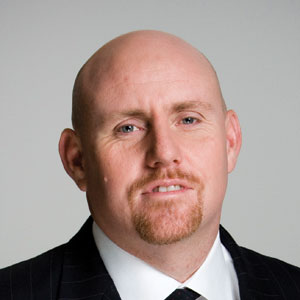 Paul Cahill, chief executive, Club Plus: Oh, you’re probably right. My view on self-managed super is I don’t think it’s unique but I believe that there is a place for it in our retirement system.
Those people who are suitably skilled, able, financed, whatever word you want to use, that can do it should be allowed to do it.
But where it becomes a generic product for everyone, which is what is being trotted out at the moment, I have huge issues with because of the consumer protections offered.
At the moment there is very little consumer protection around self-managed super. Take a fund like mine or Alex’s or NGS – the consumer protection there is enormous.
You’ve got superannuation complaints tribunals, you’ve got APRA, you’ve got any number of government bodies all over it.
Self-managed super doesn’t have that regulation. It has very small ATO regulation compared to a fund like us. So for me there are people in our fund that should get enormous comfort to know that they’ve got this consumer protection built in.
If you move to a self-managed super fund, yes, you may have control, you may have all the abilities to do things, but your consumer protection at the end of the day is yourself; and in some instances people aren’t skilled, knowledgeable, or don’t understand what it takes to run a self-managed super fund.
As I said, I’ve been doing this for years, it’s hard work. I think there was a study recently that said you’ve got to put 20 hours a week into a self-managed super fund to appropriately run it in terms of research, compliance, any number of things. People don’t do that, and my big concern is that it probably won’t show up this year, maybe even this decade, but in a period of time there might be a huge bubble in society of these people who went into self-managed super funds who are fundamentally under-funded in retirement.
Mike Taylor, Super Review: Russell?
 Russell Mason, partner, Deloitte: I think what Paul said is absolutely right. We shouldn’t fear the SMSF market. It will, as Paul said, suit certain people and I think this industry, instead of attacking it, should perhaps better understand it and understand why people go to self-managed funds.
There’s a million Australians who see that as an attractive option. Some of them may have been mis-sold for others. It could well be the right option for them. But I think the point Paul makes about regulation and security is very important.
Again, if I could (I would) turn around to this Government or the Coalition and say, “bring all superannuation regulation in under the same regulator, give it to APRA”.
And it’s not a criticism of the ATO. The ATO is a collector of revenue on behalf of the state and they do it well and they have a very difficult job from a diverse range of collection points.
But the regulation and supervision of super should be with APRA, whether it’s an industry fund like NGS and Club Plus or AISS through to all self-managed super funds run by an individual.
If we did that I think we’d have a better system. So a plea to say, don’t use the excuse we don’t have enough resources in APRA – Government can make the resources available to have regulation under a common regulator.
Mike Taylor, Super Review: Alex?
Andrew Bragg, policy director, Financial Services Council: I think that the ATO guidelines say you should have $200,000 [for an SMSF]. In my opinion I think it should be a lot more than that. The truth is a lot of people have a lot less than $200,000 when starting their own SMSF. So as the other guys have said, that’s a consumer angle.
I think if you look back a few years, the main reason why people were going into SMSF’s, whether it was from industry funds or other funds which didn’t have master trust platform type characteristics – it was because they wanted that control.
Now with the convergence and the functionality, whether you’re an industry fund or a retail fund doesn’t matter; everyone’s got that functionality of “I can buy shares in my own name”, for example, as being one of the main drivers.
So at the end of the day, you’re left with a very small suite of reasons as to why strategically you might go into a fund, and that essentially leaves you with real property or business real property.
I think the case for why you really want to go into a self-managed super fund – unless you really have higher balances and really know what you’re doing, as the other speakers have said – it’s not a great one, because you have that functionality which exists whether through retail or through an industry fund today, now.
Obviously the statistics haven’t borne that out, which just goes to show how effective accountants are at selling self-managed super funds.
Mike Taylor, Super Review: Andrew, to wrap it up?
Alex Hutchison, chief executive, EIS Super: Look, I think we’re agnostic about the sort of fund people choose. Our principle has always been tightly held with that of the FSC around competitive neutrality.
It’s interesting people say that SMSFs can be sold and people talk about the barbecue conversation, and that becomes of course the avenue for being miss-sold apparently.
The last time I looked at the figures, the amount of people who had [SMSF] funds less than say, $100,000 or $200,000, was actually dwindling.
So if that’s the case you would hope that people with more than that amount would have some ability to control their own affairs, and do that reasonably well without a whole lot of mothering.
The other point is, where’s the ill? I struggle to see, are there great catastrophes happening out there with SMSFs? I mean there may well be, I’m not aware of them.
Paul Cahill, Club Plus: I think if you talk to some people, yes, I think some people have been burnt by SMSFs.
Andrew Bragg, Financial Services Council: You don’t see fraud in big, well-regulated industry funds or retail funds or corporate funds.
You see fraud at the self-managed super level. You see it at the smaller level where people aren’t as well-tooled or available to understand the nuances of running a super fund – and they’re the ones that get touched.
Alex Hutchison, EIS Super: Sure, so if we have the evidence of that then I think that’s where you start the debate. If it’s a systemic problem then you’d have a look at what sort of regulatory responses that you might deploy, but from our point of view, from our house view, there is no systemic failure which requires a whole suite of regulation.
Mike Taylor, Super Review: Okay, thank you very much gentlemen.